
Your 4 critical checkpoints for brand control:
- Brief & Strategy: Where misalignment starts (vague briefs lead to off-brand creativity)
- Content Creation: Where decentralisation breaks down (no asset access means improvised branding)
- Review & Approval: The bottleneck vs control paradox (too loose or too strict both create risk)
- Distribution & Repurposing: Where drift goes viral (uncontrolled adaptations multiply errors)
Why brand control matters in corporate video (and why it’s harder than you think)?
A 2025 Gartner survey of 418 marketers confirms that significant gaps remain in the ability to generate on-brand, commercially publishable media at scale—even when customisation tools exist. The production gap isn’t theoretical. It’s measurable, documented, and costing organisations thousands of pounds per rejected asset.
Video compounds this challenge in ways static content doesn’t. A single video involves moving image, typography, voiceover tone, music, pacing, and often on-screen talent—each a potential brand deviation point. When your brand guidelines were written for print and web, they likely lack the parameters video creators actually need: which typefaces are legible at 1080p, how long your logo animation should hold, what your brand « sounds » like in motion.
The rise of decentralised video creation makes this harder still. In 2025, as this Demand Gen Report investigation into B2B video compliance highlights, 89% of businesses are using video as a marketing tool. That scale demands distributed production—regional teams, sales enablement, HR, internal comms all creating content. Without embedded controls at every workflow stage, each creator becomes a potential source of drift. The question isn’t whether your brand will drift. It’s where in your workflow the leaks are occurring right now.

33%
Potential revenue increase for companies maintaining consistent brand presentation across all platforms
Stage 1: The brief and strategy phase (when misalignment starts)
The first drift point occurs before anyone opens an editing tool. It happens when a stakeholder submits a video request that says « create a 60-second product demo for LinkedIn » without specifying brand-critical parameters. Should the video open with the logo animation or dive straight into the product? Which of your three brand colour palettes applies to B2B social content? Is the tone aspirational or tactical?
When these questions go unanswered in the brief, creators fill the gaps with their best guesses—or worse, with whatever they’ve seen competitors do. A brief that’s vague on brand requirements isn’t just incomplete. It’s an invitation to improvise, and improvisation is where your visual identity starts to fracture.
Case study: When regional autonomy created brand chaos
A multinational corporation with regional marketing teams across EMEA commissioned local agencies for product launch videos. The result: seven different visual styles, inconsistent logo treatments, and messaging that ranged from formal to colloquial. Headquarters rejected 60% of the videos for brand non-compliance.
The financial impact was measurable—£47,000 in rework costs, a six-week delay to the launch campaign, and damaged relationships between headquarters and regional teams. The root cause wasn’t creative incompetence. It was structural: the brief template lacked mandatory brand fields, so each region interpreted « on-brand » differently.
The fix involved implementing a centralised template library with pre-approved brand assets whilst maintaining regional creative flexibility for messaging. Rejection rates dropped to 12%, production cost per video decreased by 40%, and time-to-publish improved from six weeks to 2.5 weeks.
What separates a brand-safe brief from a drift-prone one? Explicit constraints. Your brief template should include non-negotiable brand requirements: approved logo files, colour hex codes, typeface specifications, tone-of-voice examples, and—critically—what’s flexible versus fixed. When requesters understand which creative choices are open and which are governed, you reduce the likelihood of late-stage rejections that cost time and budget.
Stage 2: Content creation and asset access (where decentralisation breaks down)
The second failure point occurs when creators don’t have access to the assets they need to stay on-brand. Picture a sales team creating a demo video using whatever logo file they can find on the shared drive—a low-resolution PNG from 2019, not the vector file with correct padding. Or a regional office downloading stock music that clashes with your sonic identity because they don’t know your approved audio library exists.
This isn’t malice or carelessness. It’s a predictable outcome of decentralised production without centralised asset access. When your brand assets live in scattered folders, outdated SharePoint sites, or worse—someone’s local hard drive—creators will use what they can find. The resulting videos might be technically competent but visually inconsistent.
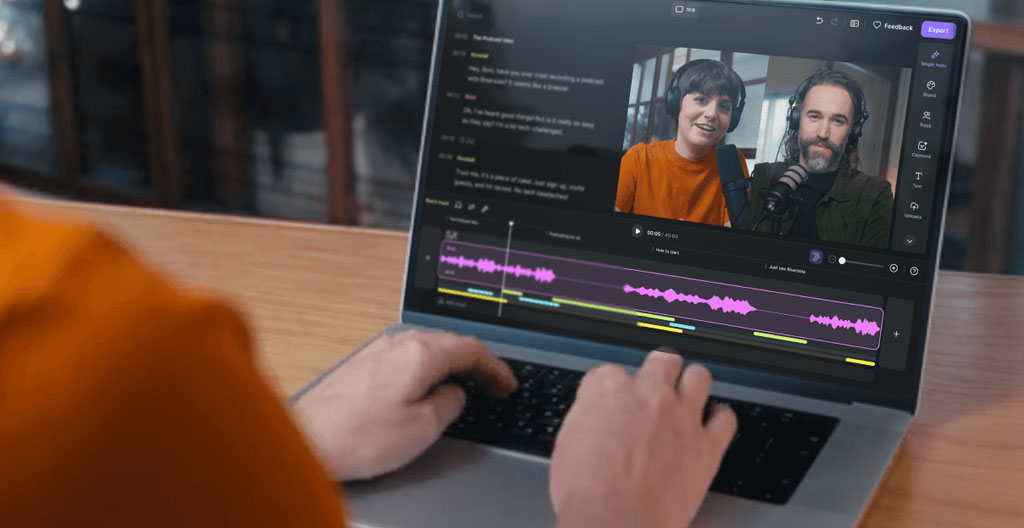
Organisations with decentralised video creation commonly report significantly higher rates of brand inconsistency compared to those using centralised models. The structural difference is simple: when every authorised creator starts from an approved template with embedded brand assets—correct fonts, current logos, sanctioned colour palettes—the baseline for « off-brand » work shifts. Platforms like PlayPlay address this by providing centralised brand asset libraries accessible to all creators, ensuring that the building blocks of each video are governed from the start, not policed at the end.
The preventive control here is access architecture. Can everyone who creates video for your organisation reach your current brand assets in under 30 seconds? If the answer is no—if it requires emailing the brand manager, digging through folder hierarchies, or guessing which file is current—you’ve identified your drift point. The fix isn’t stricter approval; it’s making compliance the path of least resistance.
The hidden cost of ‘shadow’ video creation: When official processes are too slow or cumbersome, teams create videos outside approved workflows entirely—bypassing brand controls to hit deadlines. This shadow content creation poses a higher brand risk than decentralised-but-governed production. Audit whether teams are posting video content you didn’t approve by checking regional social accounts, sales enablement libraries, and internal communications channels.
Stage 3: Review and approval (the bottleneck vs control paradox)
The third drift point is counterintuitive: it occurs precisely where you think you’re protecting your brand—the approval workflow. Organisations face a paradox. Make approvals too loose (one reviewer, no checklist, subjective feedback like « this feels off-brand »), and inconsistent work gets published. Make them too strict (eight stakeholders, sequential reviews, vague rejection criteria), and you create bottlenecks that incentivise teams to bypass the process entirely.
Research indicates that approval workflows commonly involve multiple stakeholders across marketing, legal, and executive teams. When these reviews are conducted manually, brand compliance review stages can add several days to video production timelines. The delay isn’t the only cost. It’s the unpredictability. When a creator doesn’t know why a video was rejected or what specifically violated brand standards, they can’t course-correct for the next project. Rework becomes repetitive rather than instructive.
The balanced approach embeds brand compliance checks early and automates what’s automatable. Instead of waiting for final review to catch a non-standard font, flag it at the rough-cut stage. Instead of rejecting a video for « wrong tone, » provide creators with a checklist of tonal criteria during briefing. The goal isn’t zero oversight—it’s predictable, fast oversight that catches 80% of issues before final production. Organisations implementing this model report that automated compliance checks at brief and rough-cut stages catch the majority of problems when fixes are cheap, not when rework is expensive.
What does a brand-safe approval process look like? Clear roles (who checks creative, who checks compliance, who has final sign-off), explicit criteria (not « looks wrong » but « logo appears at 0:03 for minimum 2 seconds, uses Pantone 289C »), and speed targets (five to seven days maximum from submission to decision). When the process is transparent and reasonably fast, teams use it. When it’s opaque and glacial, they route around it.
Stage 4: Distribution and repurposing (where brand drift goes viral)
What happens to your carefully branded video after it’s approved? The fourth and often overlooked drift point occurs when teams adapt approved content for different channels without re-checking brand compliance. A 16:9 video gets cropped to 1:1 for Instagram, accidentally cutting off your tagline. A 60-second explainer is trimmed to 15 seconds for LinkedIn, removing the context that made your key message coherent. An internal all-hands video is repurposed for external recruitment, carrying confidential metrics into public view.
These aren’t creative decisions—they’re operational shortcuts under time pressure. But each unsupervised adaptation is a potential brand deviation. Videos adapted for multiple channels without centralized oversight commonly exhibit higher rates of brand drift than original productions, simply because the person resizing the asset often isn’t the person who understands your brand standards.
The control mechanism here is process clarity: who’s authorised to adapt approved videos, what changes require re-approval, and how you maintain visibility into where your content is published. If someone can download an approved video, re-edit it in their personal software, and post it to a regional account without your knowledge, you’ve lost control at the distribution stage—not the creation stage.
- Brief & Strategy: Video briefs include specific brand requirements (fonts, colours, logo usage, tone), requesters understand what’s negotiable vs non-negotiable, and briefs are reviewed by a brand steward before production starts
- Content Creation: All creators have access to a centralised, up-to-date brand asset library, approved templates exist for common video types (product demo, testimonial, social), and creators know where to get help if they need off-template creative
- Review & Approval: Approval workflow is documented with clear roles and service-level agreements, brand compliance criteria are explicit (not subjective « looks off-brand »), and the process balances speed (five to seven days maximum) with control (mandatory brand check)
- Distribution & Repurposing: A documented process exists for resizing or adapting approved videos for different channels, teams know they cannot edit approved videos without re-approval, and you have visibility into where approved videos are being published
Scoring guide: 0–1 criteria met = High risk (brand drift likely occurring now). 2 criteria met = Medium risk (gaps exist that will scale with volume). 3–4 criteria met = Low risk (strong foundation, focus on optimisation).
Once you’ve secured brand control through the four stages outlined above, the next priority is ensuring your videos drive measurable business results. Consistency protects your brand equity; effectiveness converts that equity into pipeline and revenue. For a deeper look at optimising video content for performance, explore strategies for creating corporate videos for prospect conversion.
Brand drift in video workflows isn’t a creativity problem. It’s a systems problem. Each of the four stages—brief, creation, approval, distribution—presents a structural opportunity for your brand to fracture. The organisations that maintain consistency at scale aren’t the ones with the most restrictive processes. They’re the ones who’ve made brand compliance the default path, not an obstacle to route around.